

Financial Goals: How to Define and Pursue Them More Effectively

Financial goals are the foundation that helps you use money with purpose, instead of spending based on impulse or simply reacting to immediate needs. Many people earn an income and want to save, invest, or prepare for major life plans such as buying a home, getting married, or building an emergency fund, but they are not sure where to begin. Without a clear destination, managing personal finances can feel scattered and difficult to sustain over time.
This page will help you understand financial goals as a whole, how to categorize them at different stages of life, how to set goals that fit your real circumstances, and what steps to take next so you can put them into action more effectively.
Table of Contents
1. What are financial goals, and why do they matter?
What are financial goals?
Financial goals are specific money-related outcomes you want to achieve within a certain period of time. They are usually tied to a clear amount, timeline, and purpose, such as building an emergency fund, buying a home, paying for education, or preparing for retirement.
Why are financial goals important in personal finance?
They help you see where your money is going
Financial goals are a foundation of personal money management. When you have clear goals, you start making money decisions based on priorities instead of just reacting to monthly expenses as they come up. This helps your spending stay more aligned with your real needs and reduces emotional spending.
They make financial decisions easier
Once you know what you are working toward, it becomes easier to decide whether you should save, pay off debt, or invest. You can also better judge what needs to come first and what can wait without throwing your personal finances off track.
They help you build a more realistic financial plan
Clear goals create the foundation for a plan that fits your income, expenses, and current financial situation. As a result, your financial plan becomes more than a vague idea. It becomes something practical that you can actually follow and track.

They give you motivation to stay committed to long-term goals
Financial goals also help you stay disciplined while saving and adjusting your money habits over time. When you have a specific destination and can track your progress, it becomes easier to stay consistent and avoid giving up halfway through.
How are financial goals different from a financial plan?
A goal is the outcome you want to reach, while a financial plan is how you organize your cash flow and actions to get there. Put simply, a goal answers the question, “What do I want to achieve?” A plan answers, “How will I get there?”
2. Common types of financial goals
Short-term financial goals
Short-term financial goals usually focus on things you want to accomplish soon, such as building an emergency fund, paying off small debts, or saving for an upcoming expense. These goals help stabilize your cash flow first and create a base for pursuing bigger goals later.
Medium-term financial goals
Medium-term goals usually take more time and require more structured saving. Examples include buying a car, paying for additional training or education, or setting aside startup capital for a small business. This stage often sits between immediate needs and longer-term financial priorities.
Long-term financial goals
Long-term financial goals are usually tied to major milestones such as buying a home, building investments, retiring, or setting up an education fund for your children. Because these goals take longer to achieve, they need a clear plan and steady follow-through.
Goals by purpose: saving, investing, protection, and wealth growth
Besides grouping goals by time frame, you can also group them by purpose, such as saving, investing, financial protection, and improving quality of life. This approach helps you see whether your current focus is preserving money, growing wealth, or preparing for major future needs.
3. How to set clear and realistic financial goals
Start with your current financial situation
Before setting goals, you need to understand your starting point: your income, fixed expenses, debts, existing assets, and how much money you have left each month. Once you understand your current financial picture, you can identify which goals make sense now and which ones should wait so you do not create unrealistic pressure for yourself.
Use the SMART framework when setting financial goals
An effective goal should follow the SMART framework: specific, measurable, achievable, relevant to your priorities, and time-bound. This makes your goal less vague, easier to track, and easier to turn into a practical action plan.
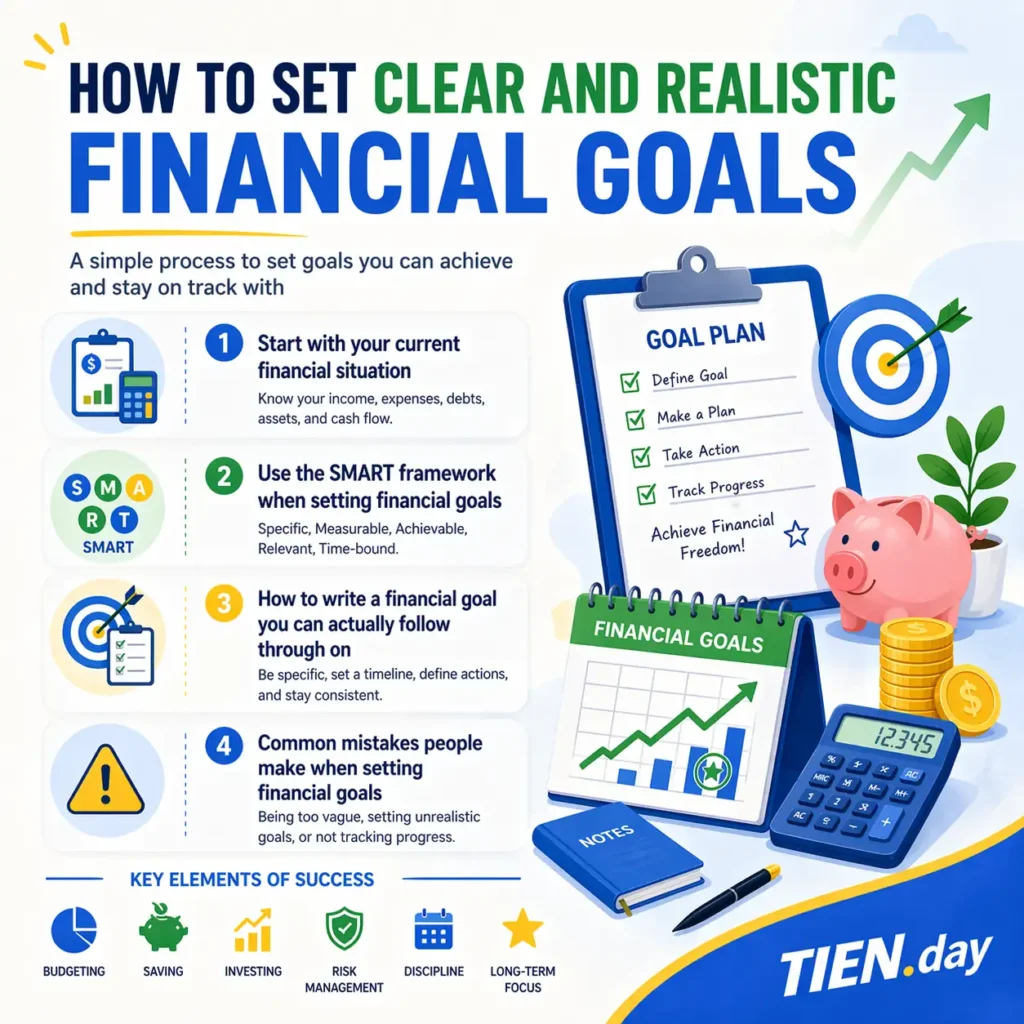
How to write a financial goal you can actually follow through on
A financial goal should include a specific amount, a clear deadline, and a strong enough reason to help you stay disciplined. It should also be tied to concrete actions, such as how much you need to set aside each month or what step needs to come first, so the goal does not remain just an intention.
Common mistakes people make when setting financial goals
The most common mistakes are setting goals that are too vague, trying to pursue too many goals at once, or choosing goals that do not fit real income and expenses. On top of that, if you do not track your progress regularly, it becomes easy to lose motivation or keep making emotional financial decisions without noticing.
4. Examples of financial goals at different life stages
Financial goals when you are just starting your career
When you are new to the workforce, sensible priorities usually include building an emergency fund, controlling spending, and developing a consistent saving habit. At this stage, goals should focus more on creating financial stability before moving on to larger plans.
Financial goals in your 30s
By your 30s, the focus often shifts from maintaining stability to strengthening your financial foundation and increasing your net worth. This is also the stage when many people begin tying financial goals more closely to family, housing, children, and longer-term decisions.
Financial goals in your 40s
In your 40s, goals often need to balance wealth building, asset protection, and retirement preparation. As financial responsibilities grow, it becomes more important to keep building wealth while also protecting your cash flow.

Financial goals for families
For families, financial goals usually go beyond one individual and expand to include emergency savings, children’s education, housing, insurance, and the ability to maintain sustainable cash flow. Because needs change across life stages, the way goals are set should reflect real priorities rather than follow a one-size-fits-all model.
5. How can you achieve financial goals more effectively?
Break big goals into smaller milestones
A large goal becomes easier to manage when you break it down into monthly, quarterly, or yearly milestones. This helps you see your progress more clearly, reduces the feeling of being overwhelmed, and shows you exactly what needs to be done at each stage.
Connect your goals to your real budget and cash flow
A goal is only realistic if it fits your current financial capacity, which means knowing how much you actually have left each month after income, expenses, and debt obligations. When your goals are tied to your real budget and cash flow, you are less likely to set expectations that are too high and abandon them halfway through.
Track your progress and adjust regularly
Reviewing your progress each month helps you see whether you are on track or whether you need to adjust the amount, timeline, or priority level of a goal. This also helps keep your goals connected to real life changes, such as shifts in income or living costs.

Pair financial goals with strong money habits
To reach your goals sustainably, you need to turn them into repeatable behaviors, such as saving money automatically, tracking expenses, and controlling emotional spending. These habits make money management more stable over time and naturally connect to broader topics like financial habits and personal finance management.
6. Which financial goals should you prioritize first?
If your income is low or unstable
If your income is still low or inconsistent, it makes sense to prioritize an emergency fund, debt control, and a realistic short-term savings goal. This order helps reduce financial pressure before you move on to larger goals.
If you are still building your personal financial foundation
At this stage, your focus should usually be on budgeting, increasing savings, and starting small investments based on what you can realistically afford. Emergency savings, debt control, and consistent saving are all basic building blocks for medium- and long-term goals.
If you have a family
Once you have a family, priorities often shift toward emergency savings, insurance, children’s education, and housing. These goals are centered on stability, protection, and maintaining sustainable cash flow.
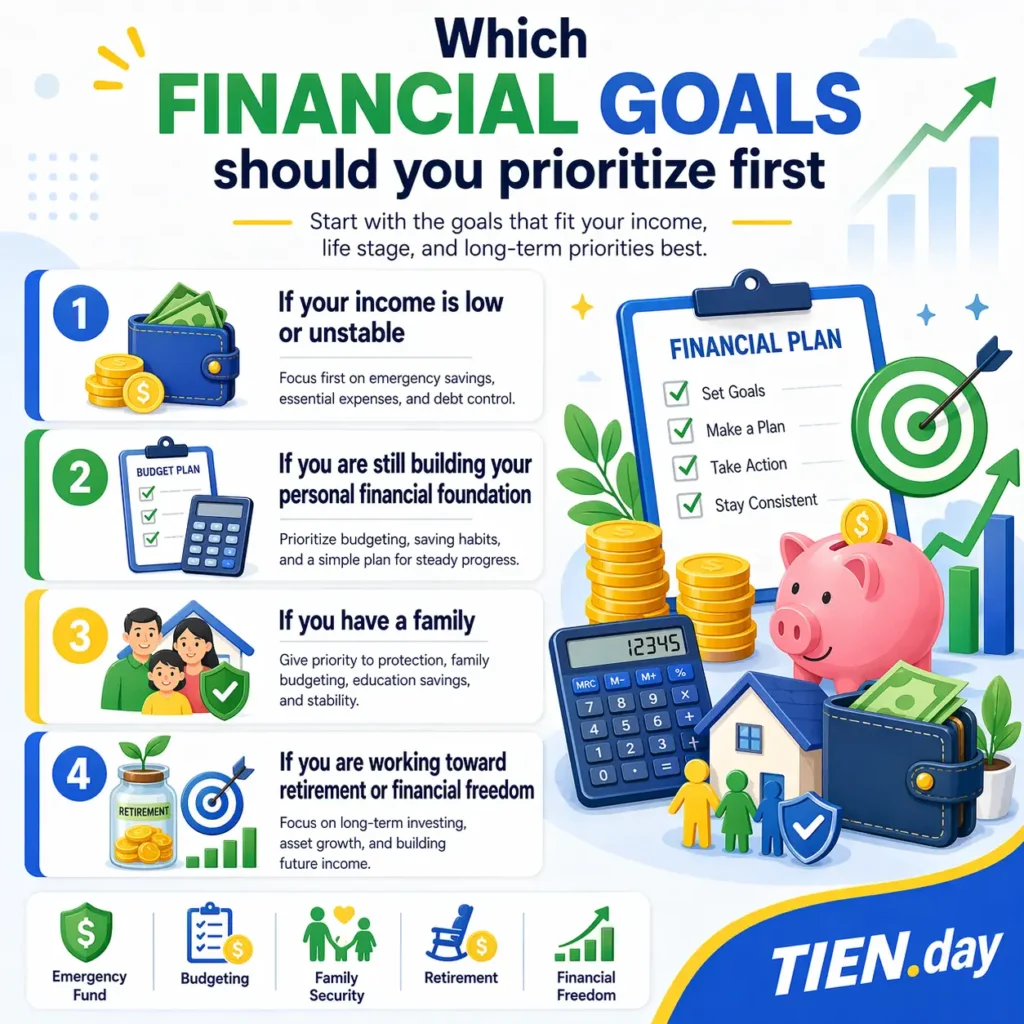
If you are working toward retirement or financial freedom
If your focus is retirement or financial freedom, it makes sense to prioritize long-term investing, building assets that can generate cash flow, and having a clear retirement plan. These are important foundations for building lasting wealth over time.
7. What should you read next in the financial goals topic cluster?
Choose the next article based on your current needs
If you are just getting started, the best next step is to read about how to set financial goals so you can learn how to identify priorities and write goals clearly. If you want to organize goals by time frame, continue with short-term financial goals and long-term financial goals. If you want a more structured method, SMART financial goals may be a better fit.
If you want to see how this works in real life, examples of personal financial goals may be easier to follow. If you are focused on a specific life stage, you can continue with financial goals when starting your career, financial goals in your 30s, or financial goals by age. Setting goals, creating a plan, and breaking goals into smaller steps usually go together in the broader financial journey.
FAQ about financial goals
-
Where should financial goals start?
You should start by reviewing your current financial situation, including your income, expenses, debt, and how much money is left each month. Once you know where you stand, it becomes much easier to choose goals that fit your reality.
-
Should people with low income still set financial goals?
Yes. In fact, low income makes clear financial goals even more important because they help prevent scattered spending and the constant feeling of never having enough money. At this stage, the goal does not need to be large. It just needs to be realistic, such as building a small emergency fund, controlling debt, or saving consistently each month.
-
Should you set multiple financial goals at the same time?
It is better not to set too many goals at once, especially in the beginning. A better approach is to choose one to three priority goals and organize them across short-, medium-, and long-term timelines so they are easier to track and maintain.
-
How often should you review your financial goals?
You should review them at least once a month, or whenever there is a major change in your income, expenses, or living situation. Regular review helps keep your goals aligned with reality.
-
Are financial goals and a financial plan the same thing?
No. A financial goal is the outcome you want to reach, while a financial plan is how you allocate money and take action to get there.
Conclusion
Financial goals help you use money with more direction instead of focusing only on immediate expenses. Whether you are just starting your career, building a family, or preparing for long-term plans, setting the right goals is an important step toward saving, investing, and managing money more effectively.
You can continue by reading about how to set financial goals or explore short-term financial goals for an easier place to begin.
Vietnamese: Mục tiêu tài chính: Cách xác định và theo đuổi hiệu quả hơn
References: