

Personal Finance
Personal finance is more than earning money and paying bills. It is the way you manage income, spending, saving, debt, and investing to support both daily needs and long-term goals. When you understand how your money moves, it becomes easier to make decisions with clarity and purpose.
Good personal finance helps reduce stress, improve stability, and prepare you for unexpected events. It also creates a foundation for building savings, protecting your future, and working toward major milestones such as education, homeownership, retirement, or financial independence.
No matter your income level, personal finance starts with simple habits: tracking cash flow, setting priorities, and using money intentionally. Small, consistent actions often matter more than perfect plans. Over time, these habits can help you build a stronger, more confident financial life.
Table of Contents
1. The Concept of Personal Finance and Why It Matters
1.1. What Is Personal Finance?
Personal finance is the management of money for an individual or a household based on their needs and goals. It is not just about daily spending. It also includes saving, debt, and investing. In other words, it is not only about earning money, but also about how money is allocated, protected, and used wisely.
Personal finance covers decisions related to income, spending, assets, debt, and financial security.
Its core purpose is to help you use money intentionally, stay balanced, and stay aligned with your priorities.
A solid understanding of personal finance helps you see your overall cash flow, recognize what you have, and identify what is missing. A strong foundation often begins with tracking cash flow, controlling spending, and setting clear goals. When you understand the concept correctly, you are less likely to confuse personal finance with simply saving money or investing based on emotion.
Reference: CFPB, Investor.gov, Journal of Economics and Finance.
1.2. Why Personal Finance Management Is Important
The importance of personal finance management becomes clear when you understand what it is and apply it in everyday life. Once you understand personal finance, you can manage money more effectively and build a more stable and sustainable life.
1.2.1. Helps You Control Cash Flow
When you understand how personal finance management works, you can track your income, expenses, savings, and monthly cash flow. This helps you clearly understand your financial situation and prepare for unexpected costs.
1.2.2. Reduces Financial Stress

When you understand what personal financial planning is, you can prepare for major future expenses. This helps reduce pressure when life changes and supports better financial decisions.
1.2.3. Creates a Foundation for Building Wealth
A clear plan helps balance income, spending, and savings with long-term goals. Through saving and investing, you can gradually improve your family’s financial situation over time.
1.2.4. Supports the Path to Financial Freedom
One of the key goals of personal finance is to build a foundation for financial freedom. When you define financial goals for each stage of life, you can create stable cash flow and move toward a more secure and financially independent life.
2. Important Components of Personal Finance
To fully understand personal finance, you need to look at the factors that determine how money is earned, used, and accumulated. When you understand how personal finance works, you can control cash flow and build a more sustainable financial foundation.
2.1. Income
Income is the foundation of personal finance and directly affects your ability to build wealth.
- Salary and primary job: Income from your main job helps maintain stable income, spending, and savings in daily life.
- Business or side work: Additional income sources can improve your financial situation and increase your ability to save and invest.
- Investment returns: Profits from investing help create cash flow and support your financial goals.
- Passive income: Income from assets can help you move closer to financial freedom.
2.2. Spending
Spending determines how you use money and has a major impact on your personal finances.
- Living expenses: Costs such as housing and food need to be managed carefully to maintain a stable life and balanced finances.
- Personal spending: Entertainment and lifestyle expenses should be kept reasonable so they do not disrupt cash flow.
- Education spending: Investing in learning can improve your future earning potential.
- Health spending: Healthcare costs help reduce the impact of unexpected risks in life.
2.3. Saving
A savings strategy helps build a financial foundation and prepare for the future.
- Emergency fund: This fund helps you handle unexpected situations such as losing your job.
- Short-term goal savings: When you set financial goals for each stage, saving becomes more effective.
- Long-term savings: Saving helps improve your family’s financial situation over time.
- Common mistake: Only saving, without combining saving and investing, can slow asset growth.
2.4. Investing
Investing helps your assets grow and creates long-term cash flow.
- Stock investing: A popular investment channel, but it requires financial knowledge. Without that knowledge, market volatility can create risk.
- Real estate investing: Real estate can increase the value of your assets within a personal finance plan.
- Funds or financial assets: Funds help diversify your portfolio and support your financial plan.
- Common investing mistake: Emotion-driven investing can harm your financial situation.
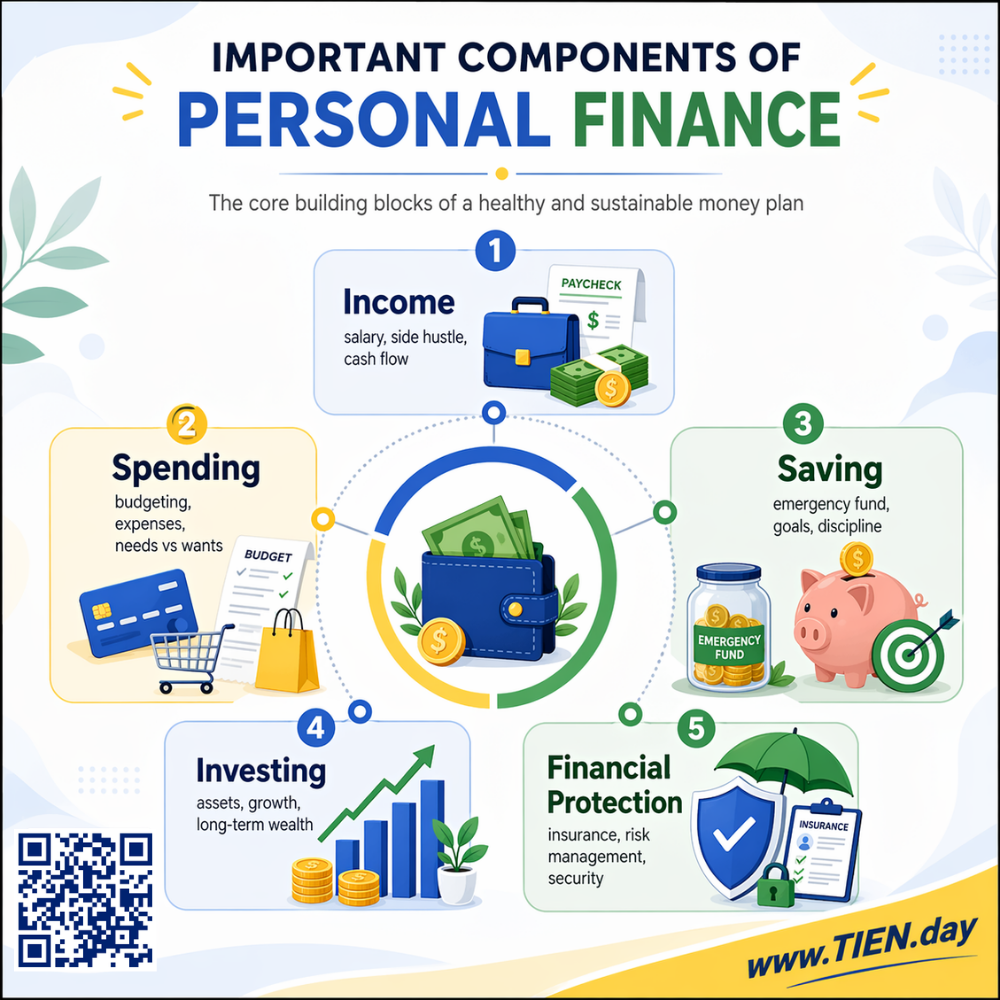
2.5. Financial Protection
Financial protection helps maintain stability in the face of life risks.
- Insurance: Insurance helps reduce losses when unexpected events happen.
- Emergency fund: This fund helps you cope with changes in life.
- Retirement planning: When you understand what a personal financial plan is, you can prepare better for the future.
- Common mistake in financial protection: Ignoring protection can negatively affect your family’s finances.
3. Important Financial Goals Throughout Life
In personal finance, understanding personal financial planning helps you set goals for different stages of life. When you recognize the importance of goal setting, you can control cash flow and build an appropriate saving and investment strategy.
3.1. Short-Term Financial Goals
Short-term goals usually cover 1 to 3 years and relate directly to immediate needs. When you define financial goals for this stage, you can manage income, spending, and savings more effectively.
- Buying a car or traveling
- Learning new skills to improve your financial opportunities
3.2. Medium-Term Financial Goals
Medium-term goals usually last 3 to 7 years and require a clear plan. In personal finance, this stage is about balancing spending with saving and investing.
- Buying a home or building an education fund for your children
- Starting a business to improve your family’s financial situation
3.3. Long-Term Financial Goals
Long-term goals usually extend beyond 10 years and involve major life plans. When you understand what a personal financial plan is, you can prepare more effectively for the future.
- Retirement and long-term wealth building
- Creating stable cash flow to move toward a secure life and financial freedom
When you set financial goals for each stage of life, money management becomes clearer and more purposeful. This helps you better understand personal finance and build a more sustainable financial strategy.
4. Principles of Effective Personal Finance Management
In personal finance, understanding how to manage money helps you control cash flow and build a sensible saving and investment plan. Once you recognize the importance of allocating income wisely, you can improve your financial situation.
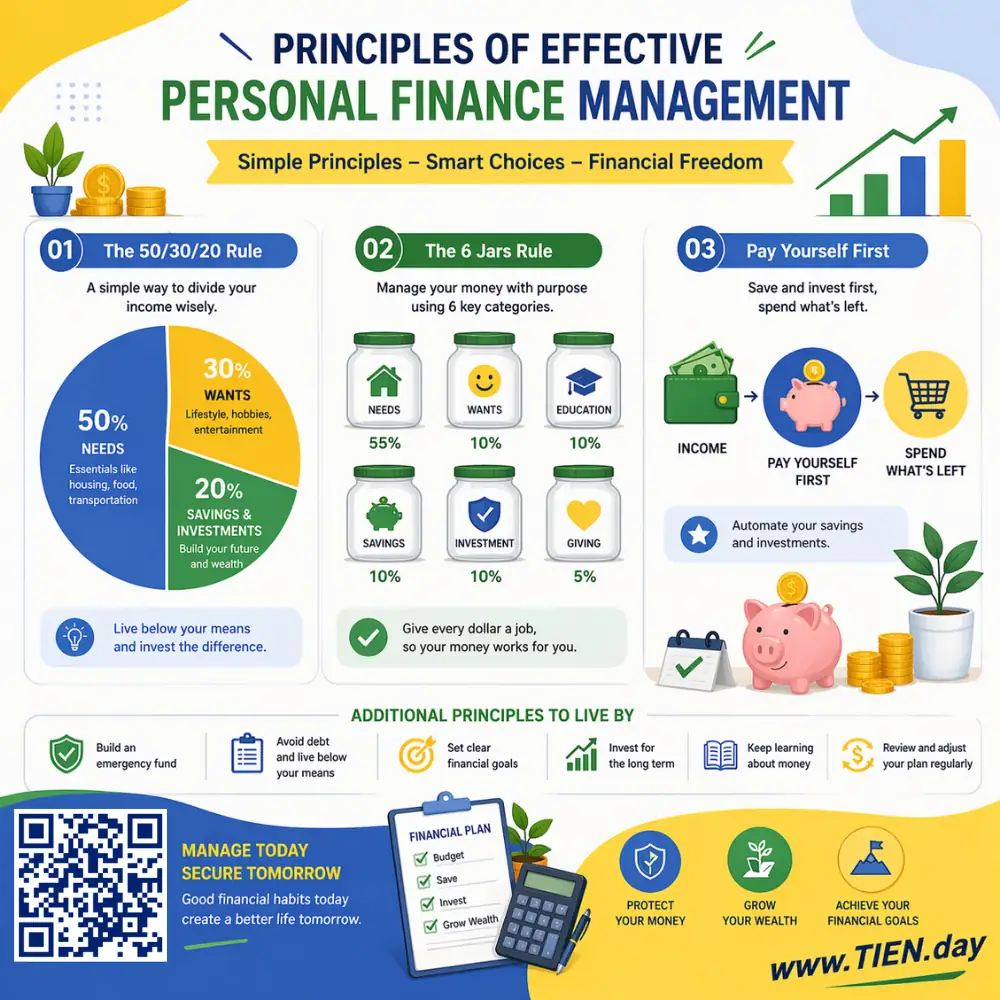
4.1. The 50/30/20 Rule
The 50/30/20 rule is a popular method in personal financial planning and budgeting. It helps balance income, spending, and saving to maintain a stable life and reduce financial risk.
- 50% for essential living costs such as housing, food, and transportation
- 30% for personal wants such as entertainment or skill development
- 20% for saving and investing to build assets and reach financial goals
The 50/30/20 rule gives you a simple and effective way to allocate income.
4.2. The 6 Jars Rule
The 6 jars rule helps many people better understand personal finance and how to manage money effectively. This method supports financial planning and helps build the habit of accumulating money over time.
- Essential expenses for daily living
- Savings for unexpected risks
- Investments to improve long-term cash flow
- Education to build financial knowledge
- Enjoyment to maintain life balance
- Giving to create social value
The 6 jars rule helps divide spending and saving into clear categories.
4.3. Pay Yourself First
This principle emphasizes saving before spending as a core part of personal finance management. When you understand personal financial planning, you can maintain stronger financial discipline.
- Save as soon as you receive your income to ensure steady accumulation
- Do not wait until the end of the month, because the money may already be gone
- Maintaining this habit helps stabilize cash flow in your personal finances
See more: Money management principles that help you control your finances effectively.
5. How to Create an Effective Personal Financial Plan
Understanding personal financial planning helps you control cash flow and improve your financial situation. Once you understand how personal finance management works, you can build an appropriate saving and investment plan.
Below are 5 core steps to build a personal financial foundation. At each step, you can go deeper depending on your goals and real-life circumstances.
Step 1: Identify Your Current Financial Situation
You need to evaluate your income, spending, savings, assets, and debt to understand your personal finances clearly. This helps you define financial goals for each stage of life.
- Income from salary, business, or investments
- Living expenses and personal needs
- Assets that can create long-term cash flow
- Debt that may affect your financial situation
Step 2: Create a Spending Budget
A budget helps control spending and gives you a clearer view of personal finance management. When income, spending, and saving are allocated properly, you can maintain a stable life and avoid debt.
- Control monthly spending
- Avoid borrowing for unnecessary expenses
- Increase your ability to save and invest
An Excel personal finance template can help track spending and manage cash flow.
Step 3: Build an Emergency Fund
An emergency fund helps you deal with unexpected risks in life. When you understand personal financial planning, you will see why this fund matters.
- Set aside about 3 to 6 months of living expenses
- Reduce financial pressure during difficult times
- Protect your long-term saving and investment plan
Step 4: Save and Invest
After building an emergency fund, you should start saving and investing to grow your assets. This is an important step in personal finance if you want to move toward financial freedom.
- Save with specific goals in mind
- Invest to create long-term cash flow
- Diversify income sources to adapt to life changes
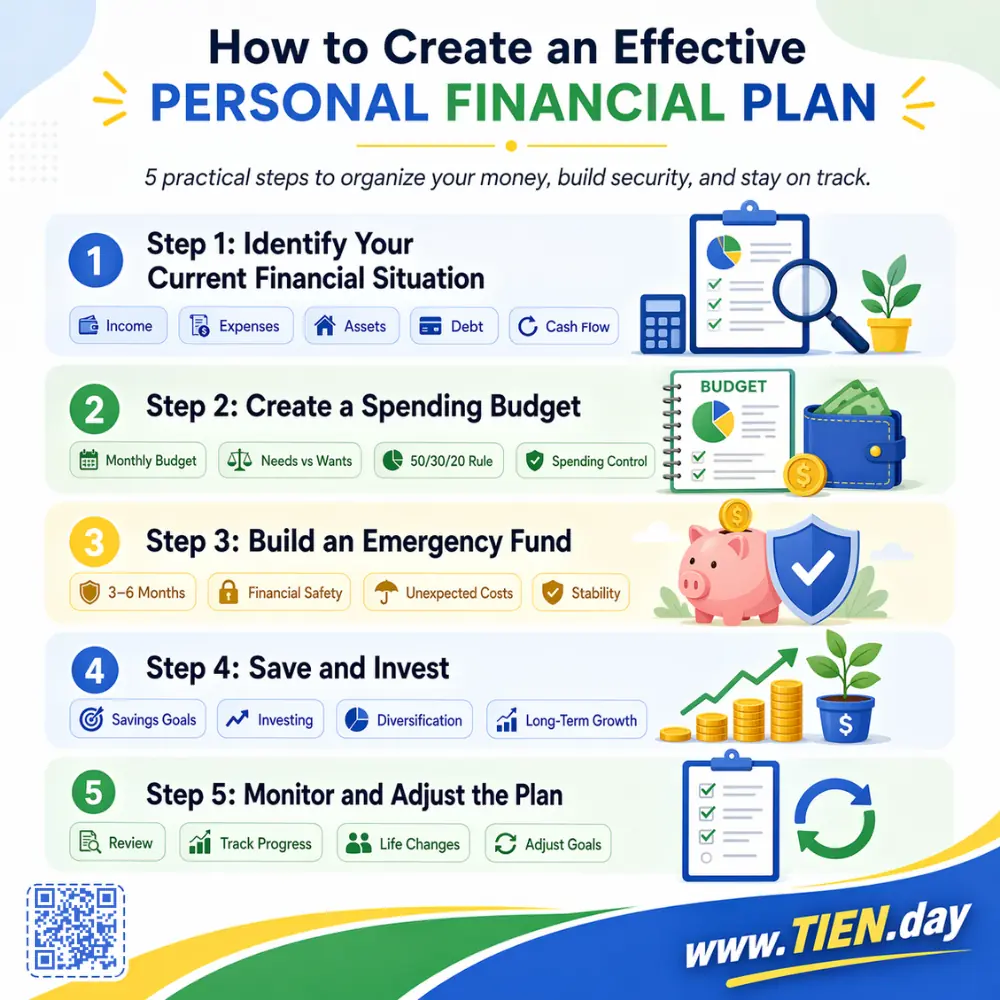
Step 5: Monitor and Adjust the Plan
A personal financial plan should be updated based on real-life changes. When you understand personal finance management, it becomes easier to adjust your strategy.
- Update the plan when income increases
- Adjust when life circumstances change
- Add new financial goals for the future
If you want to go deeper, you can explore a full guide to the 7 steps of financial planning.
6. Personal Finance for Different Groups
In personal finance, each stage of life comes with different goals and ways of managing money. When you understand how personal finance management works, you can adjust your saving and investment strategy to match the financial situation of each group.
6.1. Personal Finance for Students
Students should learn early what personal financial planning is so they can build healthy money habits. Managing income, spending, and saving helps create a stable financial foundation.
- Control spending to avoid cash shortages
- Avoid unnecessary credit card debt or consumer loans
- Start with small savings to support education goals
6.2. Personal Finance for People Starting Their Careers
The early career stage is when people should clearly understand personal finance management and begin building a long-term financial foundation. With a financial plan in place, they can prepare better for life changes.
- Build an emergency fund to handle unexpected risks
- Invest in yourself to increase income opportunities
- Learn the basics of saving and investing
6.3. Personal Finance for Families
In family personal finance, a clear spending plan helps maintain a stable life and reduce financial pressure. When financial goals are defined for each stage, money management becomes more effective.
- Create a clear household spending plan
- Build an education fund for children
- Use insurance to prepare for unexpected risks

6.4. Personal Finance for People Near Retirement
At this stage, the main goal of personal finance is to maintain stable cash flow and protect assets. When you understand the importance of financial management, you can prepare more effectively for life after retirement.
- Protect assets with a safer investment strategy
- Maintain cash flow from savings or investments
- Reduce risk to stabilize your family’s financial situation
7. Modern Personal Finance Tools
In personal finance, using the right tools helps control cash flow and improve your financial situation. When you understand personal finance management, you can choose suitable tools to track income, spending, and savings.
7.1. Expense Tracking Apps
Apps help track spending and categorize transactions in personal finance. These tools support cash flow management and help with saving and investment plans.
- Money Lover
- Spendee
- YNAB
- Banking apps such as VietinBank, Vietcombank, Techcombank, Agribank, and others
7.2. Managing Finances with AI
AI is becoming a new trend in finance and can support spending analysis. This technology helps detect unexpected risks and optimize financial planning.
- Automatic spending analysis
- Alerts when you go over budget
- Recommendations for saving and investing plans
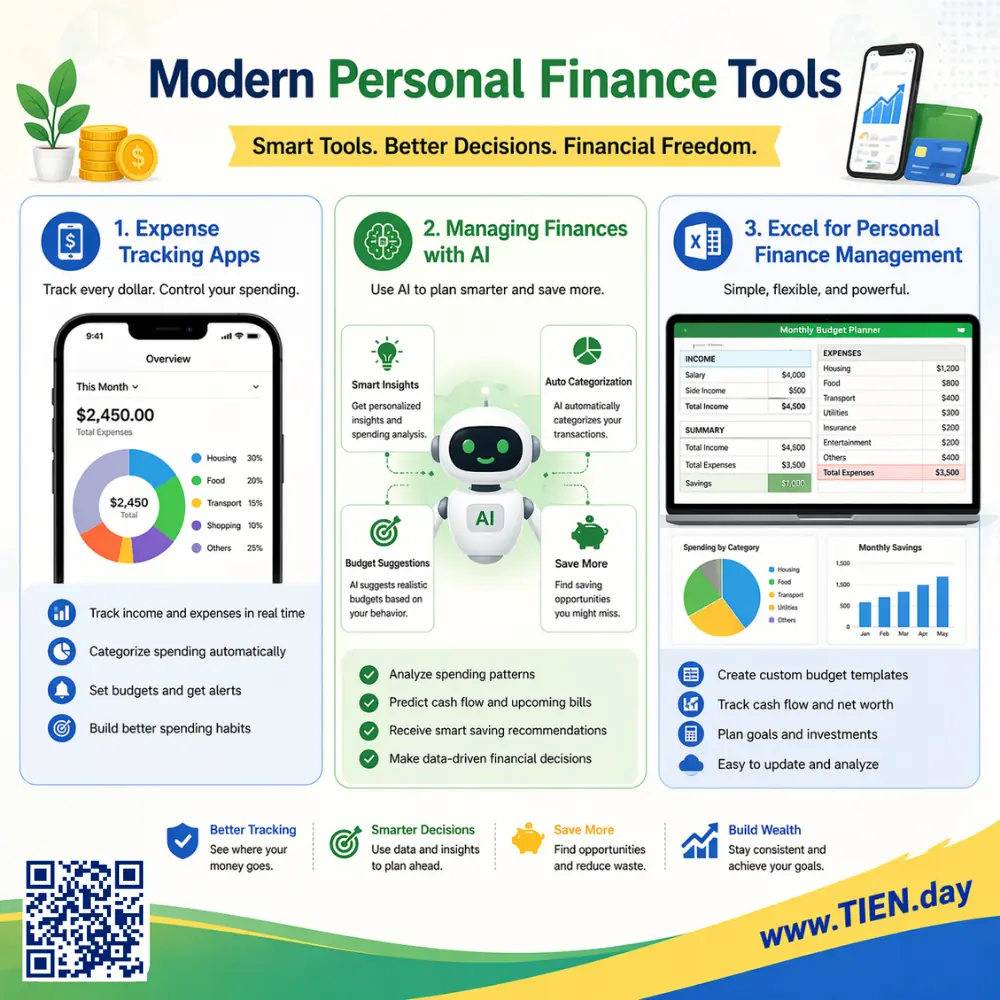
7.3. Excel for Personal Finance Management
Excel remains a popular personal finance tool because it is flexible and customizable. Many people use Excel to track cash flow and gain a clearer understanding of their financial situation.
- Flexible and easy to customize
- Useful for personal financial planning
- Free and easy to use
See more: Tools that support personal finance management.
8. Investment Strategies in Personal Finance
In personal finance, saving alone is usually not enough to build significant wealth and improve your financial situation. When you understand personal finance management, you should combine saving and investing to increase long-term cash flow.
8.1. Stock Investing
This is a common channel in personal finance for growing assets.
- Advantages: High return potential and good liquidity
- Disadvantages: Market volatility and the need for financial and market knowledge
8.2. Real Estate Investing
Real estate helps build long-term assets and can generate rental cash flow.
Gold is often used in personal finance as a way to preserve wealth.
- Advantages: Long-term value appreciation and relative stability
- Disadvantages: Requires large capital and a longer investment timeline

8.3. Gold Investing
- Protects asset value
- Helps hedge against inflation risk
8.4. Crypto Investing
Crypto has potential, but it also comes with significant risk.
- Can grow quickly
- Should usually be kept to a small allocation to reduce risk within a savings and investment portfolio
9. How to Get Out of Debt Quickly
In personal finance, debt can weaken cash flow and affect your overall financial situation. When you understand personal finance management, you can choose a suitable method to carry out a debt repayment plan.
9.1. The Snowball Method
This method focuses on paying off the smallest debts first to build momentum.
- Pay off smaller debts first
- Helps create motivation and maintain financial discipline

9.2. The Avalanche Method
This method prioritizes debts with the highest interest rates to reduce overall cost.
- Pay off high-interest debt first
- Helps save money and improve cash flow
10. What Is Financial Freedom?
In personal finance, financial freedom is the state in which your assets and cash flow are enough to support a stable life without depending entirely on a job. When you understand personal financial planning, you can build a long-term saving and investment strategy.
Financial freedom means having the ability to choose how you want to live without being controlled by money.

To reach that goal, many people focus on core principles such as:
- Managing spending and controlling income, expenses, and savings
- Increasing saving and investing to grow assets
- Creating passive income sources to improve personal finances
Many personal finance models use the 4% rule or 25 times annual expenses to estimate the amount of assets needed for financial freedom.
Conclusion
Understanding personal finance management helps you recognize the importance of managing money in everyday life. When you understand how personal finance works and what personal financial planning means, you can take better control of your financial situation.
With a clear personal financial plan, you can work more effectively toward future goals such as buying a home, investing, or building savings. Specific financial decisions can create positive changes in life and move you closer to financial freedom.
Start with small steps:
- Control your spending
- Build an emergency fund for life’s risks
- Invest for the long term to reach future financial goals
When you understand the basic principles of finance, you can gradually improve your financial situation and move closer to financial freedom.
Vietnamese: Personal Finance
References:
- CFPB – Comparing saving and investing
- Investor.gov – Figure Out Your Finances
- Journal of Economics and Finance Online – Factors affecting personal financial management behavior
Explore More Personal Finance Topics
Personal finance is a broad topic, and each area plays a different role in building a stronger financial life. To go deeper, explore the related topics below:
- Money Management – Learn how to organize income, control spending, and manage your money more effectively.
- Saving Money – Discover practical ways to save consistently and build a stronger financial cushion.
- Financial Planning – Build a clearer plan for short-term needs and long-term financial security.
- Financial Goals – Set meaningful money goals and create a path to reach them step by step.
- Personal Cash Flow – Understand how money moves in and out so you can improve financial stability.
- Financial Habits – Develop daily and monthly habits that support better money decisions over time.
- Financial Psychology – Explore how emotions, beliefs, and behavior influence the way you use money.
- Financial Freedom – Learn the principles that can help you move toward greater independence and choice.